

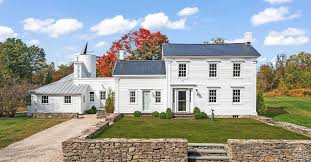
Which Smart Upgrades Actually Helped an Older Historic Home in Albany, NY Sell?
The situations described here are composites drawn from the types of jobs and decisions we encounter regularly. Names and specific figures are illustrative.
The call came in late February, the week the radiators in half of Albany were still ticking through a cold snap. A seller in Center Square had inherited a 1912 colonial from her aunt, two stories of plaster walls, original floors, a finished attic, and a basement that smelled faintly of coal even though the coal chute had been sealed for forty years. She wanted to list in April. She also wanted to know whether it was worth putting any money into historic homes in Albany, NY before showings started, and if so, where the money should go.
That question, asked in the kitchen of a house that had not been meaningfully updated since 1986, is the start of almost every smart-upgrade conversation in older Capital Region housing stock.
Where the conversation usually starts
She had a list. The list had been put together by a relative who watches a lot of home renovation television. New kitchen. Refinished floors. Knock down the wall between the dining room and the front parlor. Replace the radiators with forced air. Add central air. Smart everything.
The estimated cost, if she did half of what was on the list, was somewhere north of $90,000 and probably four months of work. She had about six weeks and a budget closer to $5,000. So the conversation, on the first walk-through, was mostly about subtraction.
The wall between the dining room and the parlor was a load-bearing wall. The radiators worked. The floors, once they were cleaned, were better than anything she could afford to refinish before April. Forced air in a balloon-framed 1912 home would have required cutting chases through three stories of plaster and would have hurt the sale price by removing some of the reason buyers wanted the house in the first place.
So we crossed almost everything off and started a much shorter list, the version of the upgrade conversation that actually applies to most older homes in our market.
The four upgrades that earned their place
The first was a learning thermostat. The house had a single-zone steam system, which most smart thermostats handle now but did not five years ago. The thermostat replaced a 1990s mercury unit on the dining room wall. Installation took about thirty minutes. It cost $230 with the wiring kit needed for the older transformer. The reason it mattered was less about the device itself and more about what buyers see when they walk in: a modern interface on the wall of a century-old house signals, immediately and without anyone having to say it, that the systems work and someone has been paying attention.
The second was four leak sensors. One under the kitchen sink, one behind the toilet on the second floor, one in the basement near the boiler, and one tucked beside the washing machine. Each was about $25. The seller asked if four was overkill. It was not. In an old home with cast-iron drain stacks and galvanized supply lines that have been quietly corroding since the Eisenhower administration, the question is not whether a leak will happen during the listing period. The question is whether you find out from a sensor on your phone or from a buyer agent on a Saturday.
The third was a video doorbell. The old wired bell had not worked since the 1990s. The replacement ran on the existing transformer once we confirmed it was the right voltage. The seller could see who rang the door from her apartment in Latham, which mattered during the showing window when contractors and stagers were coming and going.
The fourth was a smart lock on the back door. Showings were going to be lockbox showings, but the back door faced the alley and had a key hidden under a flowerpot that had been there since at least the second Bush administration. The smart lock cost $180, took about twenty minutes to install, and replaced a security situation that would have made any reasonable buyer agent nervous.
Total spend, including a $40 hub the doorbell needed, came to roughly $1,380.
What the seller asked next, and what we told her
The question after that, which comes up on almost every older home we list, was about whether to add cameras, smart blinds, a whole-home energy monitor, and a smart smoke and carbon monoxide system. The blinds alone would have been close to $3,000 for the front of the house.
The answer, with a six-week window and a 1912 colonial, was no. Cameras change how buyers feel when they walk through a house. Smart blinds become a maintenance question buyers cannot answer at a showing. A whole-home energy monitor is a great long-term tool for an owner who is staying. Smart smoke and CO units, on the other hand, are worth doing, but only after the listing, by the new buyer, because most of them require a Wi-Fi setup the seller would not be there to maintain through inspection and closing.
Most homeowners ask us, at that point, whether any of this actually affects the sale price. The honest answer is that smart upgrades do not show up in an appraisal in any clean way. What they do affect is the speed and the tone of the offers. A house that feels maintained and modernized at the systems level, even when the floors are 113 years old, gets cleaner offers with fewer inspection-driven renegotiations later. For a seller working through our seller representation process, that difference is often worth more than the dollar amount of the upgrades themselves.
What showed up at the open house
The first open house ran from eleven to one on a Saturday in early April. Forty-three groups walked through. The comments that came back through the sign-in sheet and the buyer-agent calls afterward were not about the thermostat or the leak sensors specifically. They were about the feeling of the house. It felt cared for. It felt like the systems worked. The kitchen, which we had not touched beyond a deep clean, was described as charming rather than dated in almost every piece of feedback.
Three offers came in by Tuesday. The accepted offer was about $18,000 over the list price with an inspection contingency that ended up costing the seller a $400 credit for an unrelated chimney flashing issue. The smart upgrades did not directly produce that outcome. They produced the conditions in which that outcome was the most likely one.
For sellers thinking through this kind of decision, our written sellers guide walks through how pre-listing prep, pricing, and showing logistics fit together. And if you want to know roughly where a specific older home stands before committing to any spend, we can run a home valuation based on recent comparable sales in the same neighborhood.
What this kind of project actually teaches
An older home in this region rarely needs to be modernized. It needs to feel like the people who lived there were not fighting it. A learning thermostat on a steam system, a leak sensor near a hundred-year-old drain stack, a working doorbell, and a back door that does not depend on a flowerpot, those four decisions, on a 1912 colonial in Center Square, did more than a $30,000 kitchen refresh would have done in the same six-week window. For homeowners considering whether historic homes in Albany, NY are worth holding and improving, the answer is almost always yes, as long as the improvements are quiet enough to respect what the house already is.
The seller, two months after closing, sent a message asking what she should have done differently. The honest answer was nothing. She had stopped short of the projects that would have hurt the sale and spent on the ones that helped. For most owners of older homes in this market, that is the whole game. For more context on small pre-listing moves that tend to pay off, our notes on curb appeal in Upstate NY and which kitchen and bath updates actually increase Albany home value are the next places to read.
For the broader Capital Region context, see the broader read on maximizing appraisal value.
For a deeper dive on the specific side of this, see our guide on how much is my house worth in albany ny.
More on Albany Home Valuation from McDonald Real Estate


