

What Should You Check Before Buying an Upstate NY Home With a Wood Stove?
When buying a home with a wood stove in Upstate New York, I would ask about the stove, the chimney, and the installation records before treating it as a ready-to-use feature. A general home inspection and a specialist’s evaluation of a wood-burning system are not automatically the same service.
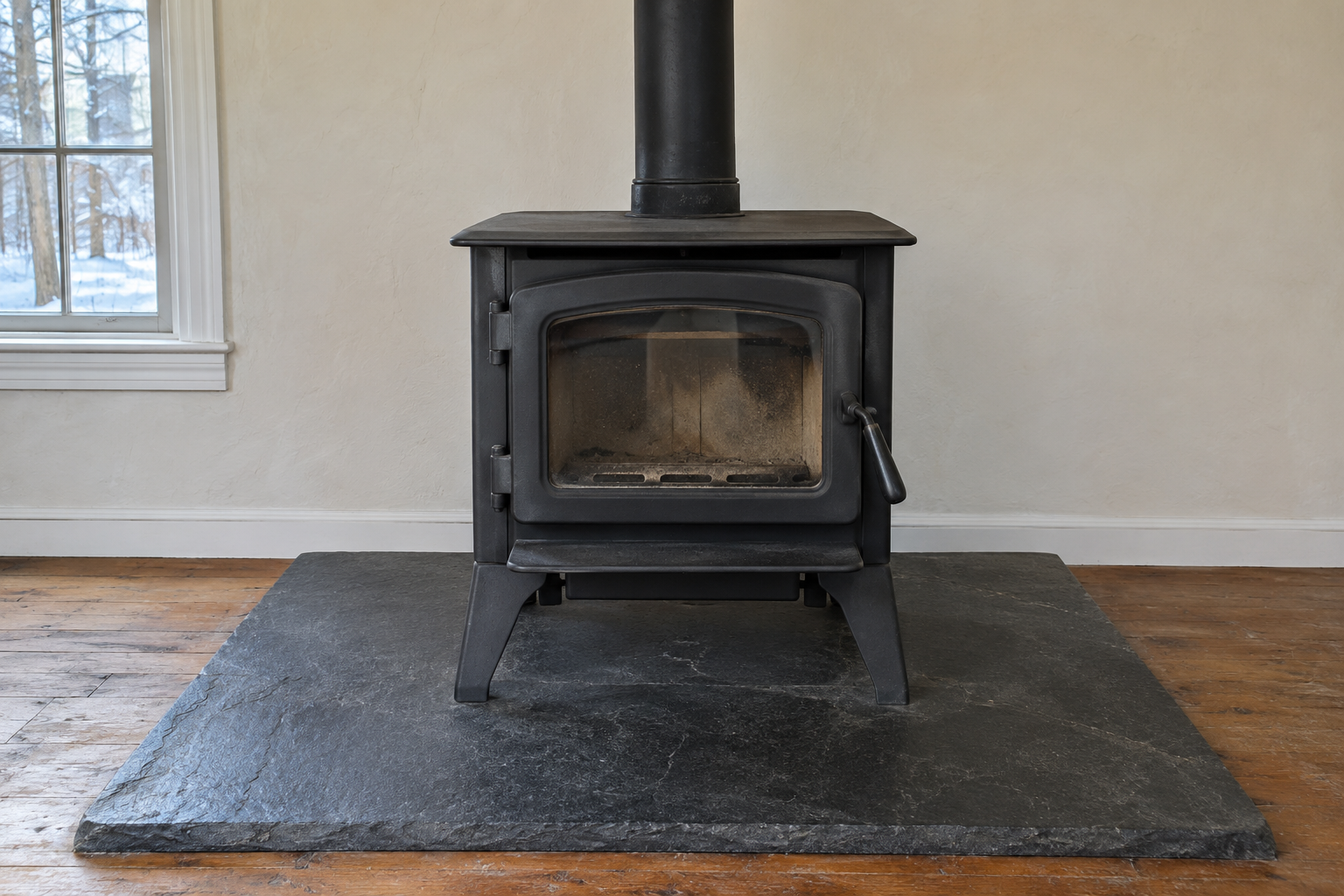
Imagine a buyer touring a Delmar home in November. The stove makes the living room feel comfortable, and the buyer hopes to use it after moving in. The homeowner situation in this article is an illustrative example, not a report of a specific customer or completed job.
What does a standard New York home inspection cover?
New York’s standards require home inspectors to observe and report on visible, accessible fireplace and solid-fuel appliance components. They also expressly exclude certain tasks from the required inspection, including examining chimney interiors, lighting fires, determining draft, or moving stoves.[1]
That means a report mentioning the wood stove is not necessarily a detailed assessment of the concealed venting system. I would read the actual inspection agreement and report, then ask what was inspected and what remains outside the scope.
Our Upstate New York home inspection playbook covers the wider house inspection. Here, I would use the stove’s presence to identify an additional question early enough to act on it.
Ask for records before the inspection deadline
I would request the stove’s make and model, its installation manual if available, installation or alteration records, and recent chimney inspection or sweeping documentation. Missing paperwork does not by itself establish that a system is unsafe, but it leaves an unanswered question.
For the illustrative Delmar property, the relevant local office is the Town of Bethlehem Building Division. It directs owners to contact the department about permit questions and local requirements.[2] I would ask which records exist for that address and installation rather than apply another town’s rule or assume that an old stove was approved because it has been there for years.
The buyer’s attorney and inspection professionals can then advise how unresolved findings fit the contract and inspection period. I would not promise a particular contractual remedy or tell a buyer that every missing document can be fixed before closing.
“I would rather ask for the stove records and a specialist’s assessment during the inspection period than let a warm room stand in for evidence that the whole system is ready to use.”
Colin McDonald, Broker/Owner, McDonald Real Estate Company
What should a chimney or hearth specialist address?
I would ask the specialist to define the proposed inspection scope in writing. What can be seen? Does the evaluation include the interior of the flue? How will clearances, the hearth, the connector, and the appliance’s relationship to its venting system be assessed? What limitations will the report state?
CSIA’s homeowner guidance recommends at least annual inspection of chimneys, fireplaces, and vents, with cleaning or repairs as needed.[3] An inspection and a sweeping are related, but an invoice for removing deposits does not necessarily answer every installation question.
EPA’s archived technical guidance emphasizes appliance clearances, floor protection, venting, and professional installation assessment.[4] I would use it as background for questions, not as a substitute for the current local code, the actual appliance manual, or the specialist’s findings. The Burn Wise pages stopped being updated in October 2025.
Does an EPA label mean the installation is approved?
No. EPA’s archived explanation describes certification of wood-burning appliances for emissions standards and identifies the appliance label as a way to check certification.[5] That is a different issue from whether this stove and chimney were properly installed in this house.
New York DEC also distinguishes new indoor wood stoves, which fall under EPA standards, from outdoor wood boilers governed by separate state provisions.[6] I would not apply an outdoor-boiler setback or a Canadian inspection label to an indoor stove in a Delmar living room.
For the buyer, a useful sequence is to identify the model, find the applicable documentation, and let qualified professionals assess the installed system. A sales description such as EPA-certified cannot answer all three questions by itself.
Check insurance while there is time to resolve questions
I would tell the buyer to disclose the wood stove to the proposed insurer and ask what information the company needs before issuing coverage. Do not assume every insurer treats the same appliance the same way or will accept the seller’s existing policy as evidence.
New York DFS notes that homeowners policies can differ and recommends examining the coverage and declarations carefully.[7] An insurer’s willingness to cover the house also does not replace a technical safety inspection.
If the purchase proceeds with repairs or further documentation required, keep the responsibilities and completion evidence clear. Our home maintenance article can help organize the broader post-purchase routine without repeating that whole checklist here.
Make a plan for move-in, not just the showing
A November buyer may be keen to use the stove immediately. I would ask how the home will be heated if the stove needs work and confirm the role of the main heating system with the inspector. Our seasonal home-buying article covers the wider timing question.
New York’s Department of Health advises that stoves and fireplaces must be properly installed and vented, recommends annual heat-source maintenance, and calls for working carbon monoxide alarms.[8] If a CO alarm sounds or poisoning is suspected, leave the home and seek emergency help rather than troubleshooting the stove from inside.
For help buying a home with a wood stove, I would start with the records and inspection scope while the purchase is still being evaluated. The aim is to understand the feature you are buying, the unanswered questions, and who is qualified to answer them before the first fire after closing.
Sources
- New York Department of State — Home Inspection Professional Licensing Law and Standards of Practice, §§197-5.12 and 197-5.14 (March 2026)
- Town of Bethlehem — Building Division
- Chimney Safety Institute of America — Homeowner Resources, annual inspection guidance
- U.S. EPA — Wood-Burning Installation and Maintenance (archived Burn Wise guidance, no updates after October 30, 2025)
- U.S. EPA — Frequent Questions About Wood-Burning Appliances (archived Burn Wise guidance, no updates after October 30, 2025)
- New York Department of Environmental Conservation — Residential and Commercial Wood Burning
- New York Department of Financial Services — Homeowners Insurance: Basic Coverage and Adding Coverage
- New York Department of Health — Take Steps to Prevent Carbon Monoxide Poisoning


