Which Upgrades Should A Top Realtor In Albany, NY Tell You To Skip?
- Big-ticket upgrades like luxury kitchen guts, inground pools, and primary-suite expansions almost always lose money in the Capital Region.
- Appraisers in Albany County bracket value against nearby sales, so finishes above the block ceiling stop adding dollar-for-dollar.
- Modest, visible fixes (paint, lighting, deferred maintenance, a clean roof report) tend to do more for the final number than a glossy renovation.
- The right move depends on the street, the school district, and the buyer pool you’ll actually attract.
The situations described here are composites drawn from the types of jobs and decisions we encounter regularly. Names and specific figures are illustrative.
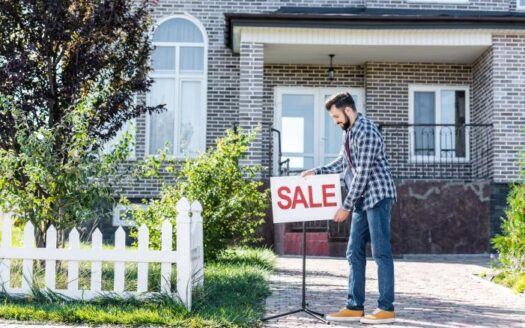
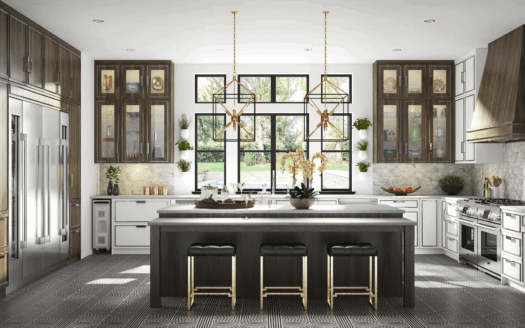
A top realtor in Albany, NY usually does not get the upgrade question until after the work is already done and the offers come in lower than expected. This one was different. A Loudonville couple, both empty nesters, called before they had signed anything. They had decided they were going to list their 1980s colonial in the spring and wanted to gut the kitchen first. Their thinking was reasonable on the surface: the cabinets were oak, the counters were laminate, and a friend in Saratoga had just spent ninety thousand dollars on a chef’s kitchen and sold within a week. They wanted to know whether to go quartz or marble before the cabinet order went in.
What they actually needed, before any of that, was a number. Not a renovation quote. A realistic ceiling for their block, pulled from comparable sales inside a one-mile radius over the last twelve months. When that number landed on the table, the conversation about cabinets stopped on its own.
Where the conversation usually starts
Most sellers in the Capital Region come in already half-decided. They have walked through a friend’s renovated home, scrolled Zillow for an hour, and built a mental picture of what their place needs to look like to compete. The picture is almost always more expensive than the market will reward. The job of a local agent, in the weeks before a listing, is to slow that picture down and compare it to what the appraiser is actually going to do.
In this case, the couple’s colonial sat in a pocket of Loudonville where the highest sale in the last year was just under six hundred thousand dollars. The median was closer to five-twenty. A ninety-thousand-dollar kitchen, even done beautifully, would not move their ceiling because the ceiling is set by the block, not by the cabinets. Appraisers bracket value with nearby comps. If the comps do not show chef kitchens, the chef kitchen does not get credited at full cost. The gap shows up at appraisal, and then either the buyer’s lender holds the deal hostage or the seller writes a credit. Either way, the renovation money walks out the door.
This is the part sellers find hardest to hear. It is not that the upgrade is bad. It is that the upgrade is mispriced relative to the street.
The upgrades that almost never come back in the Capital Region
Some categories of work miss the mark often enough that they have become predictable. A luxury primary suite expansion is one. In older Albany colonials, pushing the footprint to add a spa bath and a sitting area usually means stealing closet space or skewing the layout in a way the next buyer reads as awkward rather than indulgent. Comparable sales are tied to similar square footage and bedroom counts. A swollen primary suite that does not add a bedroom can quietly produce a long appraisal gap.
An inground pool is another. The Capital Region has roughly four months of usable pool weather. Buyers in this market read pools as liability, fencing, insurance, and an annual service contract. Some families do love them, and on the right Saratoga lot a pool can hold value. On a typical Bethlehem or Niskayuna lot, the offer spread almost never covers the install.
Sunrooms and four-season rooms tend to disappoint the same way. If the addition is not on full HVAC and properly insulated, the appraiser is likely to bracket it as a porch or three-season space, not as living square footage. The cost per square foot to build is high, the credit on resale is low, and the gap is large enough that it can sink a marginal deal.
A full roof replacement done purely for color or brand is the quiet one. If the shingles are aging out or there is an active leak, replace them and document it carefully because buyers ask for age and condition on every offer. But if the roof has real life left and the only reason to swap it is a different look from the curb, that money sits down. Buyers do not pay a premium for a roof brand. They pay for a roof that passes inspection.
What the Loudonville couple decided instead
Once the comp set was on the table, the kitchen plan changed inside the same afternoon. The cabinet boxes were sound, so refinishing replaced replacement. The counters came out, but quartz went in instead of the marble that had been on the original quote. The backsplash got swapped for a clean, neutral tile. Pulls, faucet, and a new range hood finished it. The total came in just over twelve thousand dollars instead of ninety.
The money that did not get spent on the kitchen gut got redirected. The roof had eight or nine years left and an inspector confirmed it, so it stayed. The furnace had not been serviced in three years and was running loud; that got handled. A handyman walked the house with a punch list of small things: a railing that wobbled, two outdoor outlets that did not work, a basement humidity reading that was higher than it should be. Each of those, on its own, is small. Together, they tend to be what makes a home inspection feel calm rather than alarming, and a calm home inspection is what protects a deal from re-trading after the offer.
Paint was the other place real money went, and it was nowhere near as much money as a renovation. Walls in the main living areas were repainted in a quiet warm white. Trim got touched up. The front door got refinished. The lawn got edged and a few overgrown shrubs came out. None of this is glamorous. All of it photographs well, which is where the first offer is really made: in the listing photos a buyer scrolls past on their phone.
The moment more money would have stopped helping
There is a point in almost every pre-listing conversation where the seller asks whether to do one more thing. A new front walk. A finished basement. Replacement windows on the back of the house. The honest answer is that it depends on the rest of the house and on the price point, and that the second half of a renovation budget usually returns much less than the first half.
For this couple, the line landed somewhere around twenty-five thousand dollars of pre-listing work. Below that, every dollar appeared to be doing real work, reducing inspection friction, improving the photos, and removing visible reasons for a buyer to discount. Above that, the additional spend would have started to lap the block’s ceiling. Spending more would not have produced a higher offer; it would have produced a slightly nicer home that sold for the same number, with the difference coming out of the sellers’ net proceeds.
That is the part of the math most sellers do not see until after the closing statement. The renovation budget is not separate from the sale price. It is a deduction from it.
What most sellers ask at this point
By the time the planning conversation is wrapping up, a few questions come up almost every time. People want to know whether kitchens and bathrooms are still the most important rooms, and the honest answer is yes, but only to a point, and only in the form of clean, mid-grade finishes that read modern in photos. We have written about which kitchen and bath updates actually move the needle on Albany value, and the short version is that paint, hardware, lighting, and counters tend to outperform anything structural.
People ask whether smart-home wiring is worth it. In most Capital Region homes, no, because wireless devices satisfy almost every buyer and a hardwired system rarely returns its install cost. People ask about garage conversions. Almost always no, because losing covered parking in an upstate winter costs more in buyer perception than the added living space gains. And people ask whether they should just list the house as-is and take a lower number. Sometimes yes, particularly when the deferred maintenance is large and the timeline is short. That answer belongs to a different conversation, but it is a real option and it deserves to be on the table.
What this story changed for the next seller
The Loudonville house went under contract about three weeks after it hit the market. The offer was a few thousand above asking. The inspection produced a short list and no re-trade. The appraisal came in clean. The kitchen, which had nearly been gutted, photographed as a refreshed mid-grade kitchen and that was apparently enough.
None of that is a guarantee for the next house. The next house has a different block, a different layout, and a different buyer pool. What carries across is the order of operations. Before any renovation decision, the comparable-sales ceiling for the street has to be on the table. Before any line item gets approved, it has to be measured against that ceiling rather than against what feels like a good idea. And before any of it, deferred maintenance and basic presentation usually do more for the final number than the big-ticket project that gets the most attention.
The role of a top realtor in Albany, NY in that sequence is mostly to keep the math honest. The seller knows their house better than anyone. The agent’s job is to know the block, the buyer pool, and what the appraiser is going to do with the comps when the deal is on the line. If those three things are clear before any contractor is hired, most of the worst upgrade decisions never happen. For sellers thinking through this in detail, the sellers guide we hand to people prepping a Capital Region listing covers the order of operations, and a free home valuation is usually the first concrete step before any spending decision.
For the broader Capital Region context, see how appraisers actually weigh upgrades in the Capital Region.
Next steps
For the full walkthrough, read How Can I Maximize My Home Appraisal Value? — Colin’s complete guide for Capital Region homeowners. Ready to talk about your specific situation? See our Free Home Valuation in Albany, NY page or call (518) 505-4977.
For the service side of what’s covered here, our buying your first home in Albany, NY page lays out the specifics.
Our related walkthrough on your first home purchase how to prepare with a trusted rea… covers the finer points.
More on Albany Home Valuation from McDonald Real Estate